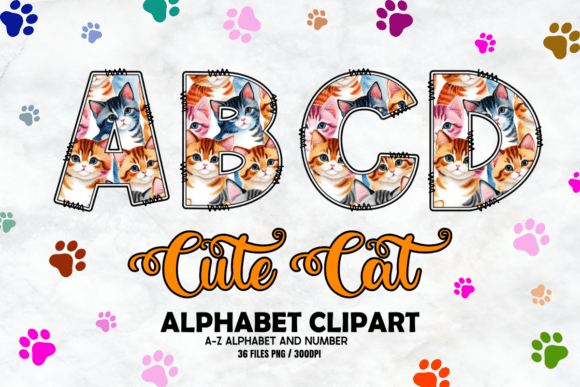
Cute Kitten Cat Doodle Alphabets PNG
First Impressions: Playful, Hand-Drawn Charm — But Is It Embroidery-Ready?
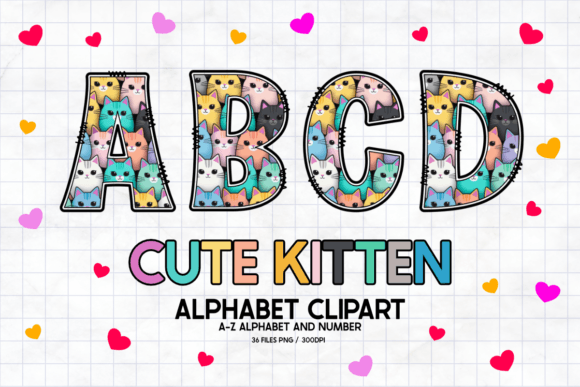
As a designer who’s digitized over 200 embroidery files and reviewed hundreds of digital graphics for craft businesses, my first glance at Cute Kitten Cat Doodle Alphabets PNG landed right where it should: on the mood. It’s light, cheerful, and unmistakably handmade — think pencil-sketch energy with soft curves, tiny whiskers, and gentle paw-shaped flourishes dotting each letter. The 36-character set (A–Z plus numbers 0–9) feels cohesive, not pieced together. That matters — especially when you’re stitching a child’s name on a onesie or branding a boutique apron.
But here’s what I asked myself before opening my embroidery software: Does “cute” translate to clean stitch execution? Not always. Some doodle-style alphabets collapse under dense satin stitch or blur on textured fabric. This set avoids that trap — most letters have open counters (like the loop in ‘a’ or ‘e’) and generous line weight. No micro-details that’ll vanish at 2.5 inches tall. That’s a win for real-world embroidery.
A Real Project Test: Personalized Baby Towels for a Local Nursery Shop
Last week, I used Cute Kitten Cat Doodle Alphabets PNG to embroider names onto organic cotton kitchen towels for a small-batch nursery shop. We chose soft mint fabric and pale pink thread — a pairing that leaned into the design’s gentle personality. The result? Instant recognition. Parents smiled before even reading the name — the kitten ears on the ‘K’, the tail curling from the ‘Q’, the tiny paw print dotting the ‘i’. That emotional resonance is gold for handmade product appeal.
It worked beautifully on flat, medium-weight cotton — but I noticed something critical when testing on a ribbed terry towel: the thinner strokes (like the whiskers on ‘W’ or the inner ear lines on ‘M’) softened slightly. Not a dealbreaker — just a reminder that Cute Kitten Cat Doodle Alphabets PNG shines brightest on smooth, stable fabrics. Think baby blankets, satin-trimmed pillow covers, structured tote bags, or lightweight sweatshirts — not heavy fleece or stretchy jersey without serious stabilization.
Where It Fits — And Where It Needs Caution
This isn’t a one-size-fits-all embroidery file. Its strength lies in context:
- Perfect for: Custom apparel (especially toddler and kids’ items), embroidered patches, nursery decor, holiday gift tags, boutique tea towels, personalized baby caps, and Etsy listings where charm and clarity matter more than sharp precision.
- Use carefully on: Dark fabrics (whiskers and fine lines may need white underlay), curved surfaces like baseball caps (letter spacing can distort), thin or sheer fabrics (stitch density must be reduced), and projects requiring frequent washing (test wash durability — delicate details hold up best with quality stabilizer and balanced tension).
I’d hesitate to use it for ultra-minimalist branding or high-end monogramming — this isn’t a sleek serif or refined script. It’s joyful, approachable, and intentionally imperfect. That’s its power — and its limit.
Design Assets That Build Trust — Not Just Aesthetics
As an Etsy seller and embroidery educator, I see how much buyers notice consistency. When a customer orders a “kitten-themed baby blanket” and receives a crisp, well-digitized version of Cute Kitten Cat Doodle Alphabets PNG, their trust deepens. They feel seen — not just sold to. That translates directly to repeat orders, photo reviews, and word-of-mouth referrals.
The transparent 300 dpi PNG format gives flexibility: you can resize cleanly for mockups, layer it over fabric swatches, or prep it for sublimation if your workflow includes hybrid techniques. But remember — PNGs aren’t embroidery files. You’ll need to digitize them properly. Don’t skip the test stitch. Check how the ‘S’ and ‘B’ handle tight curves. Confirm whether the ‘8’ or ‘3’ reads clearly at 1.75 inches. Small details make big differences in finished product perception.
Practical Designer Notes Before You Stitch
- Always run a test on scrap fabric matching your final project’s weight and texture.
- Compare thread colors on both light and dark backgrounds — those kitten ears should pop, not disappear.
- Review stitch density: too dense = puckering; too sparse = loss of charm. Aim for balance.
- Confirm hoop size compatibility — some letters (like ‘Y’ or ‘G’) extend lower and may need taller hoops.
- Inspect corners and joins: doodle-style lines shouldn’t fray or gap after stitching.
- Test black-and-white mockups — if it reads well in grayscale, it’ll hold up across fabric types.
- Use cutaway or tear-away stabilizer depending on fabric stretch — especially for baby items or garments.
- Verify licensing terms before selling finished products — this is a digital download, not automatically commercial-use licensed unless stated.
Final Thought: A Design That Sells Because It Feels Human
Cute Kitten Cat Doodle Alphabets PNG doesn’t try to be everything. It’s not technical. It’s not minimalist. It’s not corporate. It’s a warm, consistent, hand-crafted voice — and that’s exactly why it works so well for small shops, craft fairs, and heartfelt gifting. In a market flooded with generic fonts and over-polished vectors, this set stands out because it invites connection.
For embroidery designers building a library of reliable, expressive design assets, it fills a specific niche: lighthearted personalization that feels intentional, not algorithmic. For craft business owners, it’s a shortcut to charm — as long as you treat it like the thoughtful tool it is, not just another graphic.
Used well, Cute Kitten Cat Doodle Alphabets PNG doesn’t just spell names — it spells trust, care, and quiet confidence in your handmade product. And in today’s crowded creative economy, that’s worth every stitch.