Cat Cowboy on Turtle Art
A Design That Smiles Before It Stitches
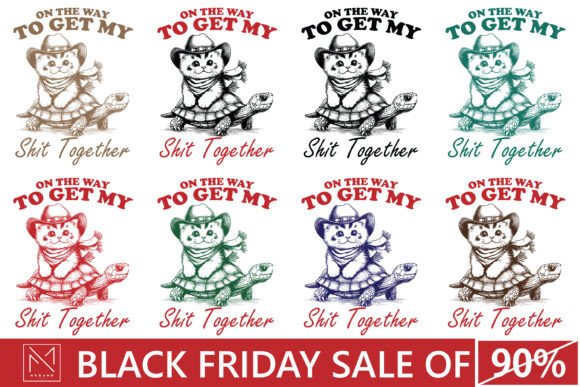
First impression? Playful, confident, and quietly clever. Cat Cowboy on Turtle Art lands with the kind of visual charm that makes customers pause mid-scroll—especially in a crowded Etsy shop or craft fair booth. It’s not just whimsy for whimsy’s sake: the cat’s tilted hat, the turtle’s steady gaze, and the subtle curve of their shared silhouette suggest narrative, not clutter. As an embroidery designer who’s stitched hundreds of animal-themed motifs, I immediately saw how this shape holds up at 3–4 inches wide—the sweet spot for tote bags, sweatshirt chests, and baby onesie backs. The lines are clean but not rigid; there’s breathing room between elements, which is golden when translating to thread.
Where It Shines (and Where It Asks for Help)
I tested Cat Cowboy on Turtle Art as the centerpiece for a custom embroidered cotton canvas tote—meant for a local boutique’s spring collection. On medium-weight fabric with tear-away stabilizer, the design stitched cleanly: satin stitch defined the hat brim and turtle shell edges, fill stitch gave gentle texture to the cat’s body without overcrowding, and running stitch added subtle whisker-like detail. Customers loved the balance—it felt handmade, not mass-produced.
It also worked beautifully on a lightweight organic cotton baby blanket, scaled down to 2.5 inches and stitched with pastel threads. The low stitch density (evident in the file’s clean vector outlines) meant no puckering, even on delicate fabric. For holiday embroidery? Think tea towels or pillow covers—this design reads clearly at a glance, making it ideal for gifting where warmth and personality matter more than precision realism.
But let’s be real: Cat Cowboy on Turtle Art isn’t built for every surface. On stretchy knit t-shirts, I’d recommend a cutaway + topping combo—especially around the cat’s ears and the turtle’s flippers, where fine details could distort. Curved surfaces like caps need careful hooping and possibly slight digitizing tweaks (if you have editing access), since the horizontal layout doesn’t naturally wrap. And while the design avoids tiny lettering or micro-features, those little cactus-shaped spurs on the turtle’s shell? They’ll vanish on anything under a 3-inch hoop or on heavy-textured burlap unless you adjust stitch length manually.
Fabric, Thread, and Trust
Thread color choice changes everything. In navy thread on cream linen, Cat Cowboy on Turtle Art feels vintage and cozy—perfect for nursery decor or artisanal kitchen goods. Switch to high-contrast black-on-white cotton poplin, and it snaps into focus for a modern boutique sweatshirt line. But on dark fabric? Check the PNG and PDF files first: do the outlines hold enough contrast for your mockup? I always test in grayscale—what reads well digitally may blur when stitched densely.
Stabilizer isn’t optional here—it’s part of the design’s voice. Too little, and the turtle’s smooth shell loses definition; too much, and the cat’s soft fur effect turns stiff. Medium-weight cutaway works best for most apparel. For patches? Add a heat-seal backing *after* stitching—not before—to preserve crisp edges.
Commercial Use: What You Need to Know Before Listing
If you’re an Etsy seller, small shop owner, or craft business building a branded collection, Cat Cowboy on Turtle Art fits right in—but only if your license permits commercial embroidery. The product description mentions “digital design pack” and lists formats (DXF, PNG, SVG, PDF, EPS), but doesn’t specify usage rights. That means: don’t assume resale of finished embroidered items is covered unless confirmed. Always check the seller’s terms before using it on wholesale aprons, boutique baby sets, or personalized gifts sold at scale.
Also worth noting: this isn’t an applique design. There’s no built-in placement guide or tack-down sequence—so if you’re planning layered fabric elements (like a denim patch over chambray), you’ll need to adapt it manually. As a graphics asset, it’s versatile for printable mockups or digital product previews—but remember, embroidery files and graphic files serve different functions. Don’t substitute the PNG for your machine’s embroidery file.
Design Judgment, Not Just Decoration
What makes Cat Cowboy on Turtle Art stand out isn’t novelty—it’s editability and empathy. The spacing between elements gives you room to add a name or date without crowding. Its moderate complexity (no nested fills or overlapping satin columns) means fewer thread breaks and smoother runs across machines—from Brother Innov-is to commercial Barudan heads. That reliability builds customer trust: when a personalized gift arrives with clean, consistent stitching, buyers associate that polish with *your* brand—not just the design.
For handmade presentation, it strikes a rare balance: fun enough for kids’ items, refined enough for adult collectibles. I’ve seen similar motifs fall flat because they’re either too cartoony (losing sophistication) or too detailed (failing on textured fabric). This one lands in the middle—and that’s where craft businesses win.
Your Practical Checklist Before Stitching
- Test Cat Cowboy on Turtle Art on scrap fabric matching your final project’s weight and stretch
- Review stitch density visually—if the file includes a preview image, look for dense clusters near the eyes or shell ridges
- Confirm hoop size compatibility: the design’s width should leave at least 0.5 inches of margin
- Inspect small details in both black and white mockups—will they read on dark fabric?
- Use proper stabilizer: cutaway for knits, tear-away for stable wovens, fusible for lightweight linens
- Check licensing: can you sell finished embroidered products? Can you bundle it in a digital embroidery kit?
- Compare thread colors against your base fabric—pastels lift on light backgrounds; metallics add flair on darks
Final Thought: A Design That Serves the Maker
Cat Cowboy on Turtle Art doesn’t shout. It invites. It works quietly across crafts, apparel, and digital workflows—not because it’s flashy, but because its structure respects the realities of thread, fabric, time, and buyer expectation. Whether you’re stitching a single holiday gift or scaling for a small shop’s summer launch, this design earns its place by making *your* work look intentional, joyful, and authentically handmade.