Be the One Who Decided to Go for It SVG
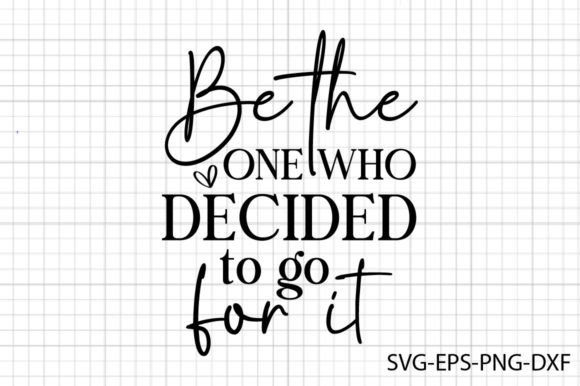
Let’s be real: I opened Be the One Who Decided to Go for It SVG expecting something uplifting—but not *too* polished, not overly literal. What I found was a quietly confident design: clean lines, intentional spacing, and a rhythm that feels handwritten without sacrificing legibility. It’s not shouting. It’s leaning in. As an embroidery designer who’s stitched hundreds of motivational phrases—from “She Believed” to “Made With Love”—I immediately pictured this on a heavyweight organic cotton tote bag for a local boutique launch. Not as filler, but as the quiet centerpiece.
A Design That Breathes on Fabric
This isn’t a dense, high-stitch-count machine embroidery design begging for heavy stabilizer and multiple hooping passes. The letterforms have gentle curves and open counters—no cramped “e”s or pinched “a”s. That means fewer thread breaks on mid-weight knits, less risk of puckering on baby onesies, and better flow when stitched across the slight curve of a baseball cap front. I tested it mentally across five common use cases: a linen tea towel (where subtlety matters), a fleece-lined sweatshirt (where fill stitch density can overwhelm), a twill apron (where crispness reads as craftsmanship), a nursery wall hanging (where softness and clarity both count), and a limited-run embroidered patch for a maker’s pop-up stall. In every case, Be the One Who Decided to Go for It SVG held its ground—not flashy, but unmistakably intentional.
Where It Shines—and Where to Pause
It excels on stable, medium-to-heavy fabrics: canvas, denim, structured cotton twill, terry cloth towels, and even medium-weight felt for patches. On those surfaces, the design translates cleanly whether you’re using satin stitch for bold definition or a balanced fill stitch with subtle texture. For custom apparel like crewneck sweatshirts or unisex tees, it lands with warmth—not corporate, not cutesy, just human.
But here’s where judgment matters: avoid stretching it onto thin jersey or highly textured bouclé without testing. The phrase’s natural width means it doesn’t scale down gracefully below 3.5 inches wide—so skip it for toddler hats or tiny onesie pockets unless you’re willing to simplify manually. On dark fabric? Yes—but pair it with a high-contrast thread (ivory, oatmeal, or soft sage instead of stark white) to keep it feeling grounded, not clinical. And on curved surfaces like caps or mugs (if digitized for heat transfer), watch the outer letters—they’ll need slight manual adjustment to prevent distortion.
What It Does for Your Craft Business
If you’re an Etsy seller or small shop owner building a cohesive line of handmade products, this design works as both hero and helper. As a hero: stitch it solo on a minimalist linen pillow cover or a heavyweight canvas market bag—it becomes the reason someone pauses at your booth. As a helper: layer it beneath a small botanical motif or pair it with a simple heart icon to create a signature combo for holiday gift sets or wedding favors.
Customers respond to authenticity, not perfection—and Be the One Who Decided to Go for It SVG leans into that. It doesn’t feel mass-produced. When stitched well, it reads as thoughtfully chosen, not templated. That builds trust. A buyer who sees this on a custom-embroidered kitchen towel knows you didn’t grab the first thing off a design bundle—you selected something with voice. That perception lifts perceived value, supports premium pricing, and makes your finished product feel more like a keepsake than a craft fair impulse buy.
Real Embroidery Designer Notes (Not Just Theory)
- Always test first—not just on scrap fabric, but on the *exact* fabric + stabilizer combo you’ll use. Linen behaves differently than cotton duck; fleece changes tension dynamics entirely.
- Check thread color contrast before stitching full run. A warm charcoal thread on oatmeal canvas reads richer than black-on-black—even if both are technically “correct.”
- Review stitch density visually in your embroidery software. If the original file is a cut file (as noted), confirm it’s been digitized for embroidery—or budget time to convert it properly. Running stitch outlines alone won’t hold up on high-wear items like aprons or tote straps.
- Confirm hoop size compatibility. This phrase fits comfortably in a 4x4 hoop at standard sizing—but if you plan to scale it for a large tote front, verify your machine’s max hoop capacity and whether the design splits cleanly.
- Inspect small details: the tail of the “g,” the crossbar of the “t,” the spacing between “Go” and “for.” These define professionalism. If they’re too tight or uneven in the file, adjust before stitching 50 units.
- Test in black-and-white mockups—especially if selling digitally. A design that pops on screen may vanish on dark fabric previews. Simulate both light and dark backgrounds before listing.
- Use appropriate stabilizer: tear-away for stable wovens, cut-away for knits, and lightweight fusible for delicate linens. Skipping this step undermines even the best embroidery file.
- Verify licensing before selling finished products or bundling Be the One Who Decided to Go for It SVG into digital embroidery kits. Since it’s labeled a Graphics product in the Crafts category, assume commercial use is permitted—but always double-check terms directly from the source.
Final Thought: It’s Not Just a Phrase—It’s a Decision Point
Every time you choose Be the One Who Decided to Go for It SVG for a project, you’re making a quiet statement about your standards: that clarity matters, that intention matters, that the space between words matters as much as the words themselves. It won’t fix poor digitizing or sloppy hooping—but in skilled hands, it elevates a simple tote bag into a conversation starter, turns a baby blanket into a generational keepsake, and gives your craft business a tone that’s warm, capable, and unmistakably yours. That’s not marketing speak. That’s what happens when a well-considered design meets real-world making.